The Arctic Ocean is Amazing

The Northwest Territories

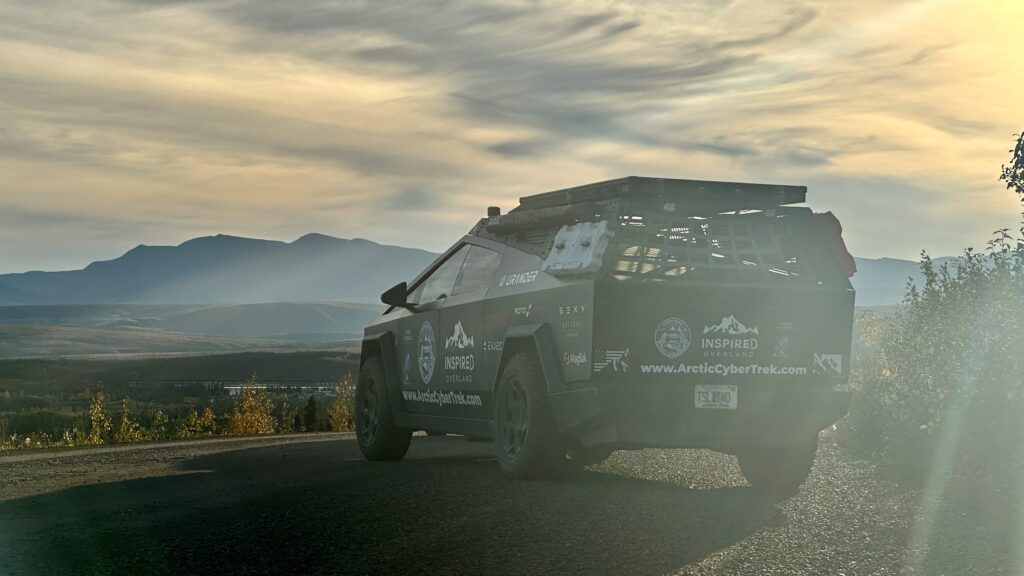
What an amazing trip. After spending almost 8 months living in the Cybertruck and visiting most of the continental United States and Canada’s provinces, we headed out from Washington State towards The Arctic Ocean in Tuktoyaktuk, North West Territories (TUK). I knew it would be an epic trip, but it exceeded all my expectations.

In this short post, I want to give you a compressed breakdown of the trip route, and the charging challenges we encountered along the way to Tuk. It is worth noting that after we drove from Washington state into Canada, the last Tesla Supercharger we were able to use going north, was at the city Prince George in British Columbia.

From there, we had to use Canada’s unreliable (at the moment) EV charging infrastructure to make it over 1,790 miles to what we designated as the starting point of the expedition to The Arctic Circle. Whitehorse, Yukon.

From Port Angeles, Washington, where we were camping to Whitehorse, Yukon is the first challenge via the BC-97 and The Alaska Highway, with BC Hydro and Flo chargers along the way. We struggled at several chargers to initiate charging, but that was 2024. By the time you read this it may be better.

This is still in somewhat populated areas compared to what goes next after Dawson City with very limited options. You have another option a bit closer to the west coast from Prince George (1,004 miles), but with a bit less charging infrastructure availability.

The drive to Eagle Plains from Dawson City is about 254 miles from the town, but now there should be a charger by the entrance of the Dempster Highway that saves a good 25 miles from the town (if it is working), leaving you with no less than 229 miles with no charging available going through constant elevation changes of 4k feet (1.2k meters) up and down up and down many times so the energy usage is a lot.

We drove it at 35-45 Mph in order to make it. Then Eagle Plains is where you would hopefully charge next at one of the wall connectors we donated. It was down for a bit but should now be working. Level 2 slow charging, should still be at 50 amps.

From there to Inuvik is about 227 miles and although there could be more, we donated 3 wall connectors (1 at Polar Bear Tires and 2 at Arctic Char) If you would want a clean place to rest while you charge, Arctic Char is the best option. Ask for Merle.

Then it’s only 94.5 miles to Tuktoyaktuk. There are two more wall connectors we donated there and you have to coordinate with the town hall team to use them. To charge your vehicle from Prince George one-way, I would make sure to have at least at $500 budget. Not because you would 100% need it, but just in case. If you already have all the equipment you need for living in the vehicle and covering all basic and emergency needs, then add the budget for food and preparing it.

Easy another $500 one way for two and add more if you plan to stay at all at any paid location. Whether it’s a campground, hotel, or boon-docking be ready for the unexpected. So I would make sure to add another $1k to the one-way budget.

It would be difficult for many EVs at once, as there isn’t enough infrastructure to charge multiple vehicles at the same time in many of the charging locations. So if you do the trip with a second vehicle, consider leap frogging like we did more than once when it was possible. Definitely easier for one or two only.

The extra headaches of having two vehicles may prove worth it if one gets in trouble and the other one can help. Whether with rescue or repairs, the buddy system is best. We actually proved it on the way back especially. I think there is a very high chance that you can make the trip with a single vehicle with zero complications and only have joyful frustration-free experiences, but be ready just in case.

Getting to The Arctic Ocean after so many surprises, was something I will never forget. If you haven’t seen the highlights reel of the trip, make sure you watch it at my YouTube channel here.
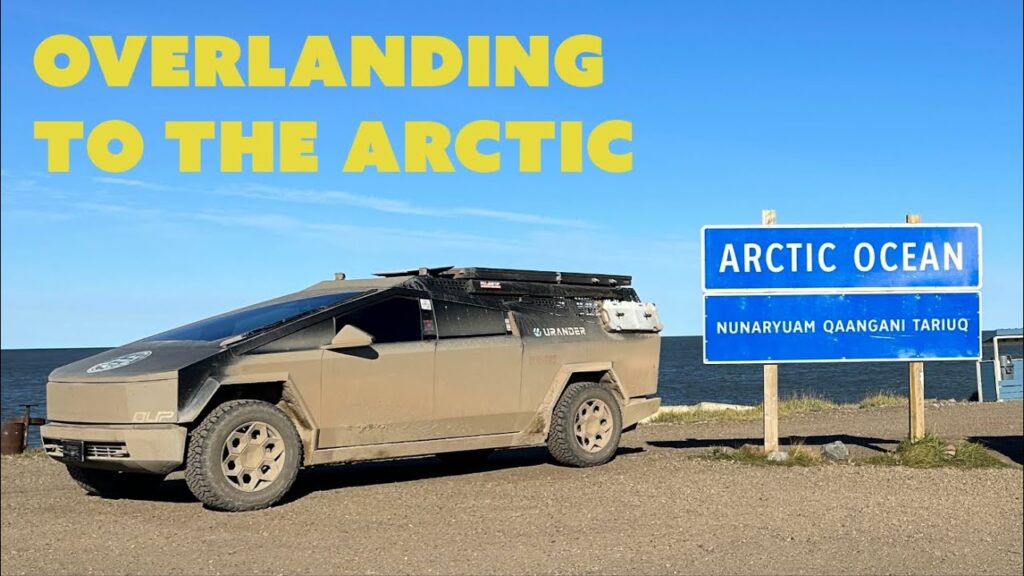
Trip to The Arctic Ocean
https://bit.ly/TesLatinoArcticDriveh

As time allows I will add more information here. We are already planning an epic trip to cover the Pan-American Highway all the way to the end of South America and another epic adventure in the Caribbean island of Puerto Rico, but between those, we are also adventuring within United States while we search for sponsors.

Have fun, wherever you are.

Ciao!
The Adventures keep getting crazier

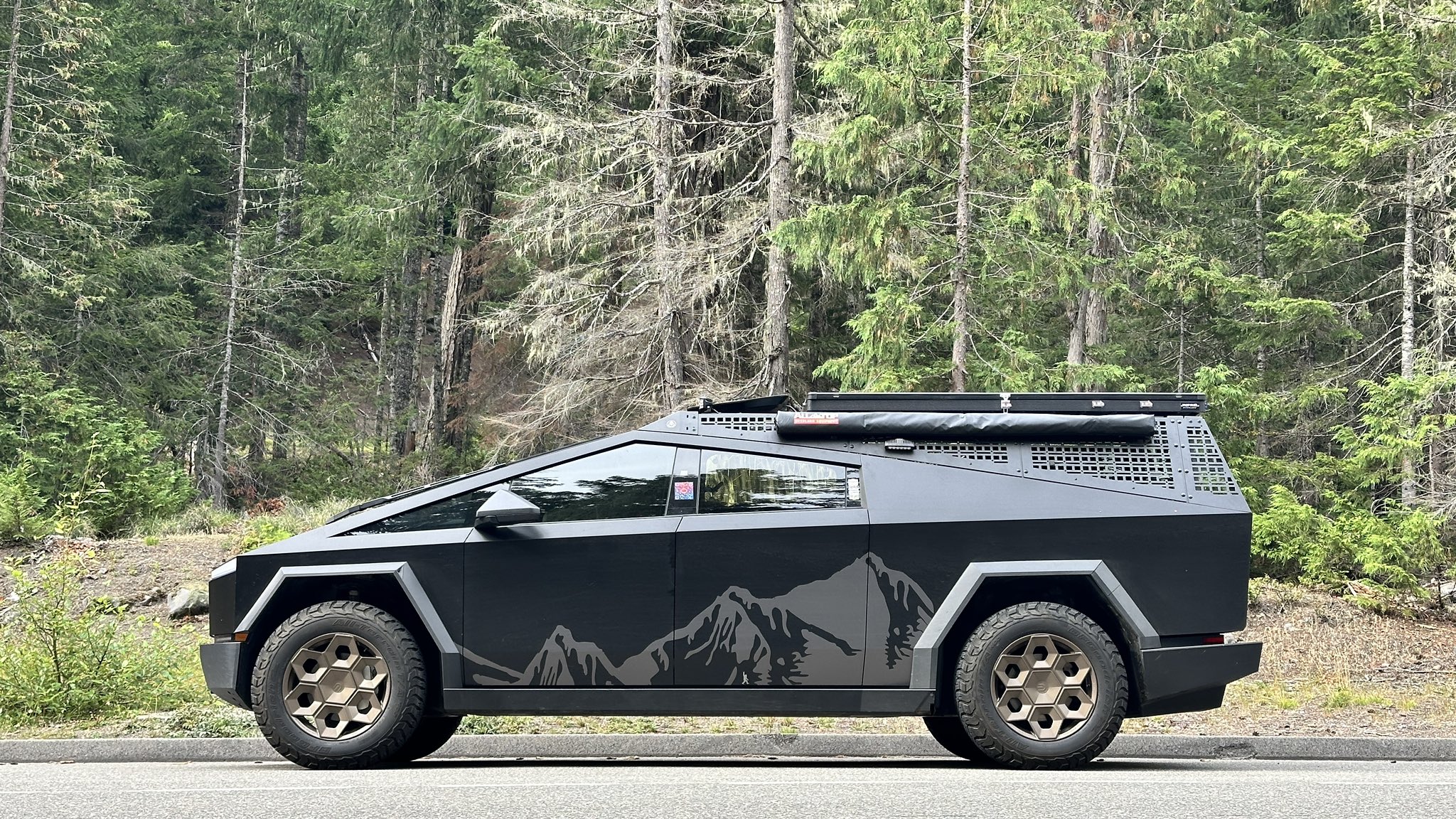
As I type this, today I sit at a hotel room in Whitehorse, Yukon. We are on a trip to the Arctic Circle and beyond. The destination goal is Tuktoyaktuk ant the Northwest Territories Canadian province. It will be a challenging drive, since there is no real EV charging infrastructure. The weather is cold, and we are first timers on this route.

Image

We trust our planning will work out in our favor. There are scheduled stops. Not many, but there are. I am hoping to capture the full experience as I navigate the harsh environment to the top of the world. The Arctic Ocean. I hope this is as exciting to you as it is to me. So far this has been a trip I will never forget.

We left South Florida on June 10 and today (August 29) we are still on the road on our way to the Arctic in Yukon. Unbelievable, really. I will provide a full breakdown of our 2024 adventures soon.

But now I have to get ready to drive the Cybertruck to Dawson City.

For more details on the current expedition, which I am doing with Nancy, Gary and Justin in two Cybertrucks, please visit https://arcticcybertrek.com

Full Self Driving Beta Community Videos

When Tesla invited me to join their Early Access Program for a chance at testing the FSD Beta, I wasn’t the only one invited to be part of the program. At first, about 10 people only, from around the world (in USA really), were given the chance to become beta testers of the new FSD Public Beta program. The keyword here is “Public”. This small group of beta testers has grown to a larger group.

At the time of this article, there are probably between 1,800 to 2,000 beta testers of FSD, per Elon Musk Tweets, and probably closer to between 50 to 100 people that are showing videos of the beta to the general public.

Here is a short list of some of the testers that I have been able to talk to and compare videos of the FSD Beta with. I knew many of them from before we had FSD Beta, but I have also met many of them online, due the the fact that we are helping Tesla with this, and it is almost inevitable that we find each other’s content online.

Feel free to check them out. Everyone has a different style when making videos, so you will be able to see the capabilities from different perspectives.

Here are some of their YouTube channels (and mine):

The list above is in alphabetical order.

Here is a document where I am also tracking every FSD Beta update I have received:

Click here to load the list of updates

Road Trips in a Tesla. Tips for Beginners.

Since many new Tesla owners struggle with the basic aspects of road tripping with the Supercharger network at first, I want to provide highly valuable tips for beginners.

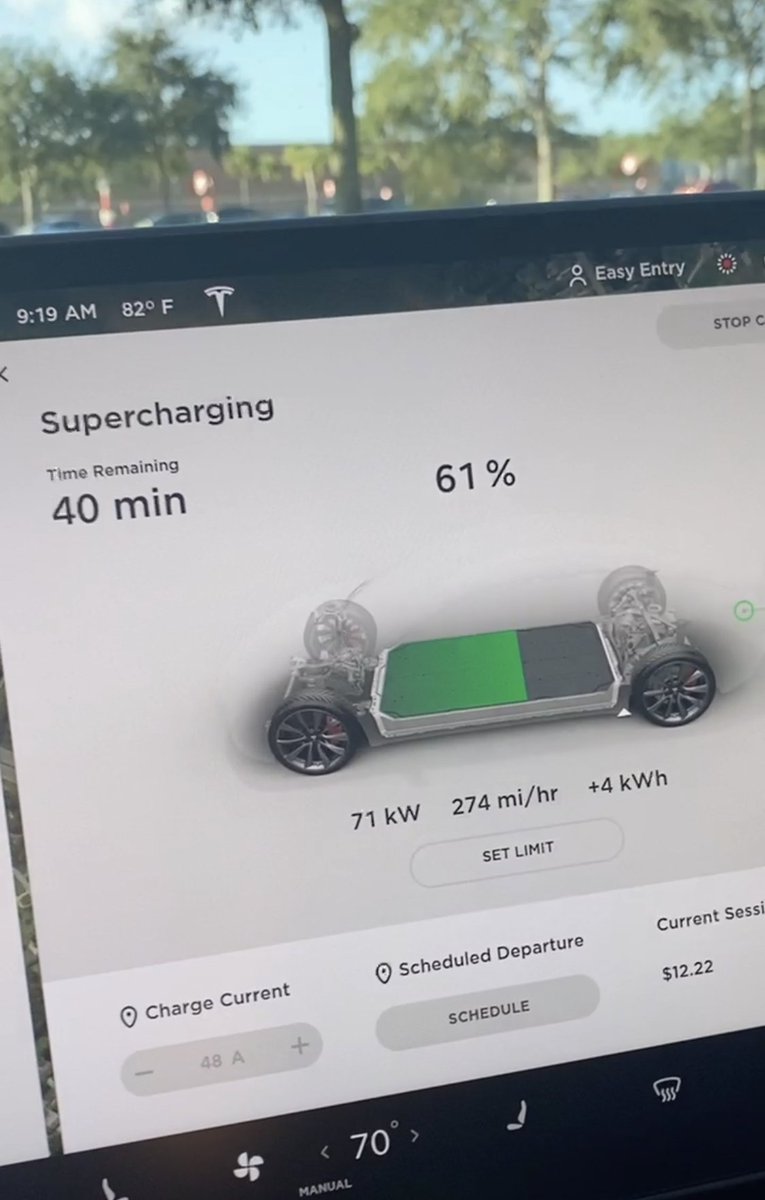
If you change the charging stops provided by the onboard navigation, it’s almost 100% guaranteed that you will delay your trip’s total time. Especially, when looking to arrive at charging stops with a higher state of charge on the battery. Why? Because charging will be slower and covering less distance per charge. Whenever you are driving with multiple stops to reach your destination, you want to drain as much battery as possible, to (a) cover more distance, and (b) to charge faster. Arriving with “a lot of juice” to charge actually delays trips.

As you do more road trips, you should get the hang of it, and realize that you can arrive with 1% to 5% with no anxiety. Then when you start charging, you will get a lot of energy really quick, and get enough charge to get to the next stop, without charging more than you need.

You can set the maximum charge to 100% and that will have no impact onto the actual road trip navigation instructions. When you start charging at every stop, the time remaining to charge is based on getting onto the next stop. But, if you miss when it says it’s ready to go, the instructions change to “how much longer it will take to your maximum configured charge”, thus delaying your trip. For example: Say your maximum charge is set to 90%. Plugging in may say you will be ready in 15 minutes and at 15 minutes, your range could be 150 miles.

When you have enough charge to leave, after a minute or two, the time to finish charging may change to 45 additional minutes. That’s 45 minutes delay on your trip, and you may not be able to get to a further charger anyway. This is where charging just enough, makes the biggest difference on your trip. This is not speculation. All of the above is based on driving USA coast-to-coast several times in my Model 3, and to Canada and back to South Florida.

If you have any questions, please, reach out to me directly on Twitter @TesLatino.

Cheers!

Electric Cars Won’t Go Mainstream Until We Fix These Problems?

Charging my Model 3

This morning, I read an article published in a major media outlet, by General Motor’s president, that frankly worries me. It feels like an article that tries to instill fear, instead of supporting an immediate move to drive electric vehicles. Of course, this way of thinking, is best for any manufacturer that is still unable to produce, only electric cars. So I understand it. But it is plain wrong, and misleading.

Range

The first obvious, fear-proposing argument, is about the range. I am going to forget for a moment that any Tesla is capable of a lot more range, than what most people need on a daily basis. Take for example a VW e-Golf. With a claimed range of 126 city/111 highway, this may not seem like a good option to switch to electric. Not because of Volkswagen’s controversial cheating scandals, but because most people think they need to have a lot more range available, from a single charge.

This is inaccurate. Most people have an average of 20-30 miles of driving on a daily basis. So, let’s double that… no, let’s triple it. Let’s say you want to be able to cover three times the average daily driving needs, 60-90 miles. You see where I am going? Not everyone has a garage, but those that do have one, or that have access to an electric outlet where the car is parked, can wake up with a full battery, every morning. In the United States, there are many places where people can charge for free or at a very low cost.

Many employers are also installing EV chargers to incentivize employees. There are many shopping centers and government locations that also provide chargers. Additionally, keep in mind that there are more places with electricity, than there are gas stations. Mostly, any building is capable of trickle-charging or even fast charge an electric vehicle.

Charging Infrastructure

The most common argument about charging infrastructure, is that there is a lack of charging infrastructure. Again, this is misleading. It may be true under some circumstances, but for the vast majority of people, this is simply not an issue. Tesla alone has a massive infrastructure in the United States. Does it need to improve? Yes. Is it improving. That would be a solid, yes, and it is accelerating at an incredible pace. But Teslas are not the only electric vehicles out there. There are exponentially more EV charging stations in the United States, besides Tesla’s Supercharging network. A simple internet search will give you hundreds, if not thousands, of charging stations near most populated areas.

To be fair, there is room for improvement on those, regarding speed, and in some cases, availability, due to lack of regulations and enforcement by the authorities, to stop charing stations from being blocked by non-charging vehicles, but for most people, this should not be a problem. Again, the fact that most people can charge at home, should make this a non-issue.

Cost

This is another myth. Although it is true, that sometimes, the initial investment on an electric vehicle, is higher than its gasoline or diesel powered counterparts, the savings in total cost of ownership, make it a well balanced, and in many cases cheaper endeavor. There are many way to run the numbers, but just to give you an idea, an EV does not require frequent, oil changes, filter changes, and for most people, hardly ever brake pads need to be replaced, by using regenerative braking. Using the electric motor to slow down the vehicle, thus not wearing out the pads as much as people are used to. Now, how much is a life worth? When you learn the health benefits of not using a gasoline or diesel powered vehicle, and in many cases, the exponentially better safety from an EV, it is an even better story about cost, in favor of EVs.

My opinion is, that the spreading of negative information regarding ownership of EVs, gets amplified when the companies and people with enough influence keep doing it. Instead, they should try to influence change in a positive way. For example, instead of telling someone that they are better off buying a gasoline or diesel vehicle because they will have more options to “fill up”, we should be asking the right questions, and providing solutions, to make the transition to an EV, easy.

For example:

Q: Do you have a garage or can you park near your home?
A1: Yes.

That means that you almost never, have to go anywhere to charge your car. You can charge at home, and wake up with a full charge every day.

A2: I don’t have a garage or can park near my house to charge.

Here is a list of all the public charging locations near you.

This is only one example, of many, to help people on their transition to a sustainable-energy and transportation future.

The future is here. . . A quick behavioral test of Advanced Summon on a Model 3

I was able to meet with someone that has access to a beta version of the Advanced Summon Tesla feature. While I was with the beta tester, I was able to capture the behavior of a Tesla Model 3 on an empty parking lot.

While there were some glitches (what beta software doesn’t have them), I was very impressed with what I saw. The car went on multiple occasions, to different spots, as the commands were entered on the Tesla app.

It seems like by design, the feature is not meant to move a car from one parking spot to another. We could not get the car to park in a new location properly. However, it seems like it almost perfectly met the purpose of going from a parked location to its owner. By either using the “find me” feature, or by reaching a pin, dropped in the Tesla app map.

Check it on my YouTube channel.